

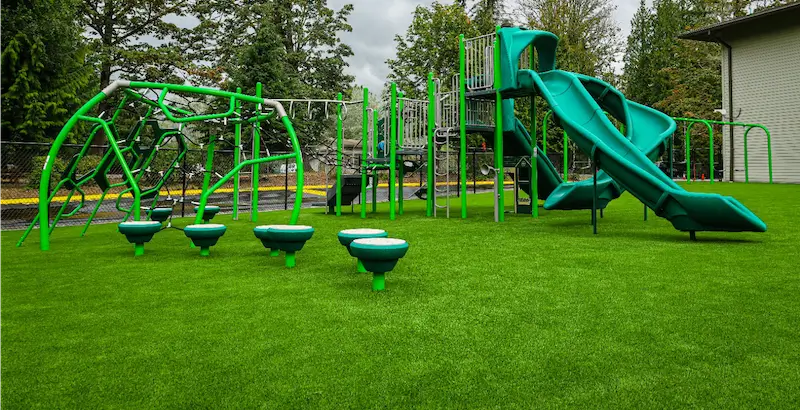
Modern recreation spaces face constant pressure from energetic children, frequent foot traffic, and unpredictable weather conditions throughout the year. Ground materials such as natural grass, gravel, or bare soil struggle to maintain safety, cleanliness, and durability under daily stress. Facility planners, therefore, search for surface options that combine resilience, comfort, and long-term practicality without constant repairs or closures.
Urban parks, schoolyards, and community play zones increasingly adopt Artificial Turf for Playgrounds as a reliable surface alternative. This material offers consistent coverage that withstands repeated activity while maintaining a clean and visually appealing environment. The following discussion explores durability, safety advantages, drainage capability, maintenance efficiency, and design flexibility within high-traffic recreational areas.
Durable Surfaces Built for Busy Play Areas
Heavy daily activity places extreme pressure on ground materials within recreational spaces. Natural grass deteriorates quickly when hundreds of running feet strike the same surface repeatedly. Synthetic grass systems maintain structure because fibers remain upright despite continuous movement.
A supportive base layer distributes pressure evenly across the entire installed field. Children, therefore, experience a stable footing that prevents uneven patches or loose ground hazards. School administrators appreciate surfaces that remain usable throughout the academic year. Reliable durability reduces closures that disrupt recess schedules or outdoor physical activity sessions.
Impact Cushion Layers Support Child Safety
Playground safety remains a primary concern for parents, educators, and municipal planners. Falls occur frequently during climbing, jumping, or energetic games among young visitors. Modern synthetic surfaces include shock-absorbing padding installed beneath the visible grass layer. This cushioning layer reduces injury risk by softening sudden impacts from falls.
Stable traction further prevents slips during fast movement or quick direction changes. Even after intense use, the surface retains uniform softness across every section. Safety inspectors, therefore, recognize such systems as dependable foundations for active recreation spaces.
Efficient Drainage Keeps Surfaces Ready Daily
Rainfall frequently transforms natural grass fields into muddy, unusable zones for several days. Effective drainage technology prevents this disruption within synthetic play areas. Permeable backing allows water to pass through quickly rather than pooling across the surface. A properly prepared foundation channel directs moisture away from the activity zone.
Children return to play shortly after rainfall without encountering slippery puddles or saturated soil. Maintenance staff avoids constant repairs caused by erosion or muddy patches. Reliable drainage, therefore, preserves cleanliness and consistent access throughout changing weather patterns.
Reduced Maintenance Supports Long-Term Budgets
Routine upkeep drains financial resources within public recreation facilities. Natural grass demands watering, mowing, fertilizing, reseeding, and pest management throughout the year. Synthetic surfaces eliminate most of these repetitive tasks. Occasional brushing restores fiber position while simple rinsing removes dust or debris.
Grounds personnel, therefore, dedicate time to broader facility improvements rather than constant lawn care. Budget planners appreciate predictable maintenance costs across many seasons. Lower operational demands make these surfaces practical choices for heavily visited playground locations.
Flexible Design Expands Creative Play Zones
Modern playground layouts benefit greatly from adaptable surface materials. Synthetic grass systems allow designers to shape vibrant activity zones across varied terrain. Curved paths, bright color patterns, and themed play sections easily integrate into the landscape. Clear visual boundaries guide movement between climbing equipment, slides, and open running areas.
This design flexibility encourages imaginative play while improving spatial organization. Educational institutions incorporate numbers, shapes, or game markings directly into the surface pattern. Such visual elements transform ordinary ground areas into engaging learning environments.
High-traffic playgrounds require surfaces capable of handling constant energy without losing safety or appearance. Communities therefore prioritize durable materials that simplify maintenance while supporting active recreation for children. Artificial Turf for Playgrounds provides a dependable foundation that balances comfort and visual appeal across demanding environments. Recreation planners continue exploring practical surface solutions that maintain safe, accessible play areas throughout every season.
